Unlock your competitive edge with our ultimate guide to price tracking software. Learn how these tools work, key features, and how to start today.
Are you setting prices in the dark? It's a common frustration. You spend hours manually checking competitor websites, trying to get a feel for the market, but it's a losing game. The process is painfully slow, prone to errors, and just doesn't scale.
By the time you've gathered your data, prices have already changed. Your strategy is obsolete before you even launch it. This constant game of catch-up costs you sales, eats into profit margins, and slams the door on growth opportunities.
Why Pricing Intelligence Is No Longer Optional
In a market that moves at the speed of light, gut feelings don't cut it. Modern price tracking software acts as your eyes and ears on the web, delivering a continuous, automated stream of market intelligence that helps you win.
Imagine if you could:
Stay Ahead of Rivals: Instantly see how your prices stack up against key competitors, 24/7.
Maximize Profit: Pinpoint the perfect moments to adjust prices based on real-time market shifts, boosting your bottom line.
Reclaim Your Time: Ditch the mind-numbing manual work and focus on high-level strategy.
Price with Confidence: Build a solid pricing strategy using live data and historical trends, not guesswork.
This isn't just a niche tool for giant corporations. The global market for this software is exploding, jumping from USD 1.69 billion in 2024 to an estimated USD 1.96 billion in 2025. Fueled by a massive 17% compound annual growth rate, these tools are no longer a "nice-to-have"—they're critical for success.
Who Benefits from Price Tracking?
So, who really gets the most out of this technology? The value ripples across your entire organization.
E-commerce managers can fine-tune product pricing to maximize conversions. Market analysts can finally see the big picture and spot industry-defining trends as they happen. Sales teams can enter negotiations with hard data on where the market stands.
It’s about more than just matching a competitor’s price. It's about feeling the market's pulse so you can make smarter, faster, and more profitable decisions. You can dive deeper in our complete guide to online price tracking.
The magic is simple: it flips the script on pricing. You go from reacting and playing defense to proactively setting the pace, all backed by clean, actionable data you can trust.
Let's break down how this software delivers a powerful ROI. Each role gains a unique advantage, turning raw data into tangible business outcomes.
Key Benefits of Price Tracking Software by Role
Professional Role | Primary Benefit | Key Outcome |
|---|---|---|
E-commerce Manager | Dynamic Pricing Optimization | Increased sales volume and higher conversion rates. |
Market Analyst | Competitive Landscape Analysis | Deeper market insights and identification of emerging trends. |
Sales Executive | Data-Informed Negotiations | Stronger negotiating positions and improved deal margins. |
Product Manager | Strategic Product Positioning | Better understanding of a product's perceived market value. |
Recruiting Manager | Competitive Salary Benchmarking | Attract top talent by offering data-backed, competitive compensation. |
As you can see, this isn't a single-purpose tool. It’s a strategic asset that empowers multiple departments to make smarter decisions, driving the entire business forward.
How Price Tracking Software Works
So, what’s the secret sauce? It might sound like high-tech wizardry, but the core process is simple. Think of it as your own personal market analyst, working 24/7 in a three-step cycle to keep you ahead of the competition.
At its core, this technology helps you stop reacting and start making proactive, data-driven moves. It’s a system that tirelessly collects, organizes, and serves up the exact information you need to make smarter, more profitable decisions.
This flowchart nails the winning formula.
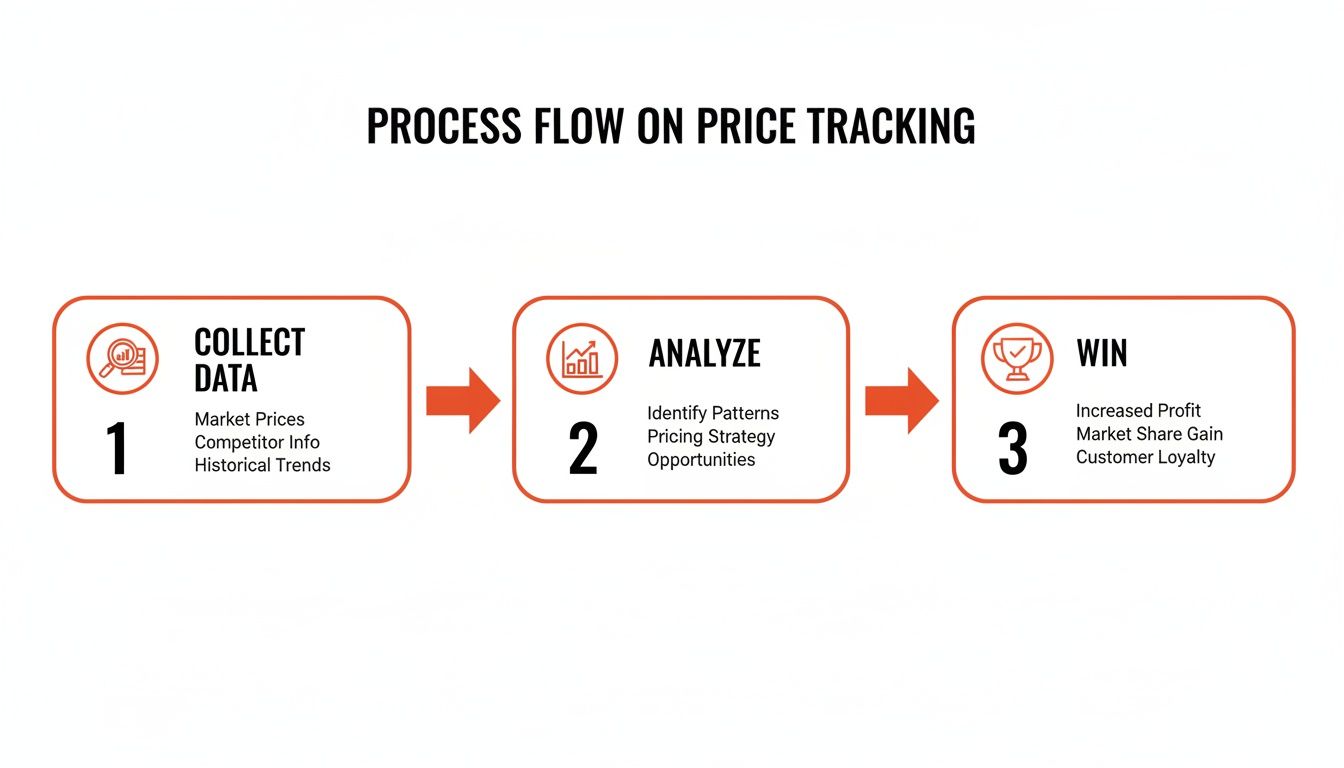
It’s a clear path from grabbing raw information to gaining a real competitive edge. It all starts with collecting the data.
1. Automated Data Scraping
First, you need the data. This is where data scraping comes in. Picture a fleet of digital assistants visiting every competitor website you care about, all day long. Instead of manually copying and pasting prices into a spreadsheet, these tools automatically pull the precise data points you need—prices, stock levels, SKUs, and more.
Modern tools have made this incredibly easy, especially no-code AI browser agents like Clura. You don't need to be a developer. Just point and click to show the agent what data to grab, and it handles all the heavy lifting, delivering clean, structured information from virtually any website.
The real game-changer here is the combination of consistency and scale. An automated agent can check hundreds of product pages in the time it takes a human to check just a handful. Your data is always fresh and complete.
2. Real-Time Monitoring and Alerts
Okay, you’ve got the data. Now what? The next step is continuous monitoring. The software keeps a constant watch over all the information it’s gathered, looking for the specific changes that matter to you.
This is where things get exciting. You can set up custom rules and alerts that notify you the second something important happens.
Price Drop Alerts: Get an email the moment a key competitor slashes their price on a bestseller.
Stock-Out Alerts: Find out instantly when a rival runs out of a popular item—a golden opportunity for you.
New Product Alerts: Be the first to know when a competitor launches a new product in your category.
These alerts are actionable triggers. They turn raw data into a reason to act, letting you respond to market shifts in minutes, not days.
3. Visual Data Analysis
Finally, the software takes all this messy information and makes it easy to understand. Instead of getting lost in an endless spreadsheet, you get clean dashboards, intuitive charts, and historical trend lines that tell a story.
This visual analysis helps you see the big picture. You can track how a competitor's pricing has evolved over the last six months, spot seasonal patterns, or see how your strategy stacks up against the market average with a quick glance. It turns a mountain of numbers into a clear narrative, giving you the strategic insights you need to win.
What Features Matter in Price Tracking Software?
Ready to pick the right tool? With so many options out there, it’s easy to get lost in feature lists that all look the same. The secret is knowing which features actually move the needle for your business.
A great tool does more than just show you competitor prices. It gives you the intelligence to act fast and with confidence, turning a flood of raw data into a massive strategic advantage. Let's dig into the non-negotiables.
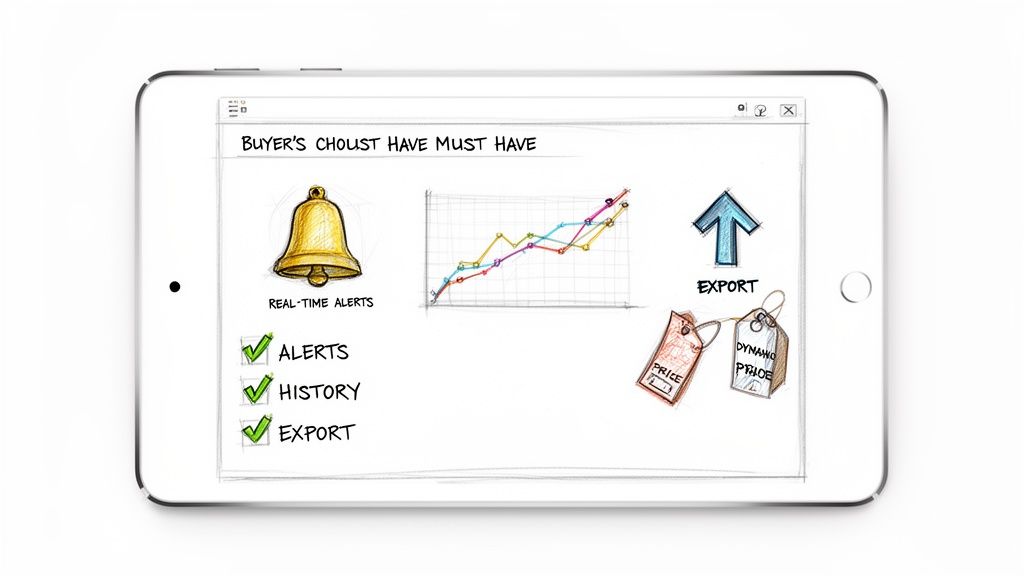
Real-Time Alerts and 24/7 Monitoring
Your competitors aren't waiting for you to pull a manual report on Monday morning. They’re changing prices and launching flash sales at all hours. You need a system that acts as your eyes and ears on the market, 24/7.
Real-time alerts are your frontline defense and best offensive weapon. Instead of finding out about a competitor's weekend promotion after it’s over, you’ll know the second it happens.
A top-tier price tracking tool is your early warning system. It gives you the power to react instantly to market shifts, letting you jump on opportunities your slower rivals will miss.
This is why dynamic pricing software has become a must-have for e-commerce sellers. More businesses are using automated tools to watch the competition and tweak prices based on demand and inventory. You can see how fast this market is growing and understand why it’s a game-changer for modern retail.
Historical Data and Trend Analysis
Spotting a single price drop is good. Understanding the why behind it is where the real money is made. The best software doesn't just show you today's prices; it opens up a rich vault of historical pricing data.
Think of this historical analysis as your personal crystal ball. It helps you spot seasonal trends, predict when a competitor is likely to run their next big promotion, and understand what a product is really worth over time. Is that "sale" price a genuine deal, or just a return to what it cost three months ago? Historical data tells the true story.
Key Features That Give You an Edge
Beyond the basics, a few other features separate the truly great tools from the merely good ones. Make sure your chosen software checks these boxes:
Comprehensive Data Collection: The best tools grab crucial context like stock availability, shipping costs, and promotional details.
Customizable Reporting: Your goals are unique, so your reports should be too. Look for the power to filter, sort, and visualize data in a way that makes sense for your business.
Seamless Data Export: Your pricing data shouldn't be trapped. The ability to easily export to a CSV or connect to other tools via API is critical for building a cohesive strategy.
Real-World Use Cases for Price Tracking Software
Features are one thing, but the magic happens when you see how price tracking software solves actual business problems. This isn't just about collecting data; it's about turning that data into smarter decisions that fuel real growth.
Let's dive into how different teams use this intelligence to build a massive competitive advantage.
For an e-commerce store, the impact is immediate. Imagine a rival suddenly goes out of stock on a best-selling product. With automated stock-out alerts, you know instantly. This is your signal to launch a targeted flash sale, scoop up their would-be customers, and watch your revenue spike.
This isn’t just a nice idea—it’s how the game is won. After all, 37% of shoppers say comparing prices online is a huge factor in their buying decisions.
Use Cases for E-Commerce Managers
E-commerce managers use price tracking to stay nimble. They aren't just playing defense by reacting to competitor price drops; they're on offense, proactively finding chances to sharpen their own strategy.
Here are a few ways they get ahead:
Dynamic Pricing: They automatically tweak prices based on real-time market demand, staying competitive without needlessly slashing profits.
Promotional Timing: By looking at historical data, they launch promotions when they'll have the biggest impact—like right before a competitor’s usual sale.
MAP Monitoring: For brands, this is a lifesaver. It ensures retail partners stick to Minimum Advertised Price (MAP) policies, protecting the brand's value.
The data you gather can also inspire more creative offers, like implementing sophisticated AI-powered bundle pricing strategies that boost your average order value.
Use Cases for Market and Sales Analysts
This data is pure gold for market analysts and sales teams, who use it to shape high-level strategy and dominate negotiations. An analyst might spot a subtle, industry-wide trend where prices for a specific product category are slowly creeping up. That single insight can inform the company’s entire product roadmap.
On the sales floor, it’s a game-changer. A sales rep can walk into a negotiation armed with undeniable proof of market rates. Instead of making claims, they can confidently state, "Our pricing is 5% below the current market average," using hard data to close deals faster.
These examples show that price tracking software is much more than a simple monitoring tool. It's a strategic weapon that delivers a clear return on investment across the entire business.
To see this in action, check out our deep dive on how to track prices on Amazon using modern tools.
How to Set Up Your First Price Monitor in Minutes
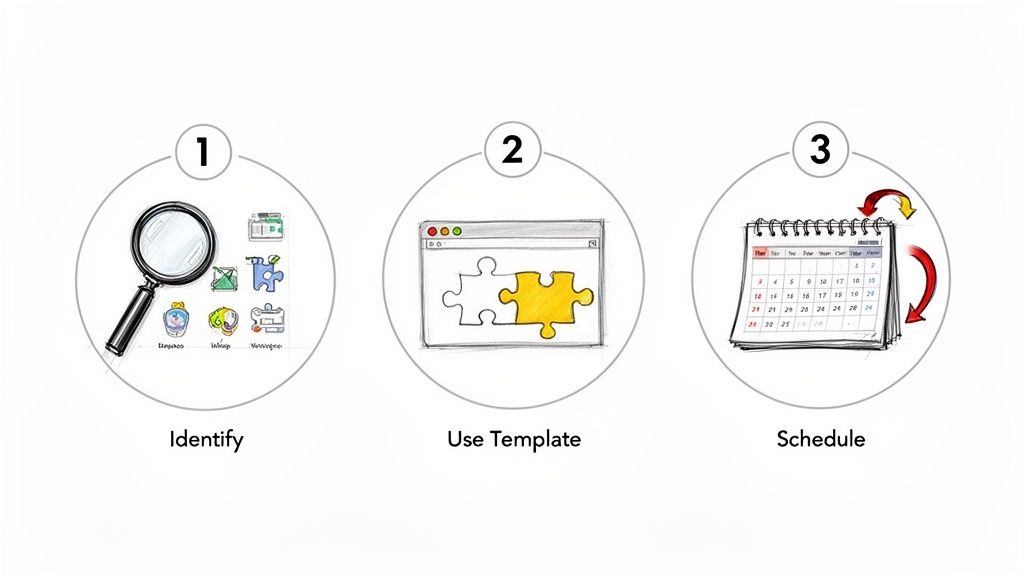
Ready to get a grip on your pricing strategy? Thanks to modern, no-code tools, you can set up a powerful price tracking system in the time it takes to drink your morning coffee.
Forget about hiring developers. This is all about taking quick, smart action. Here’s a simple, three-step playbook for going from zero to fully automated price tracking using an AI browser agent like Clura.
Step 1: Pinpoint Your Targets
First, decide what and who you're going to watch. A laser-focused approach beats a scattergun strategy every time.
Make a quick list to get started:
Key Competitors: Who are the top 3-5 companies you're constantly up against?
Target Products: Which of their products go head-to-head with your bestsellers?
Critical Data: What information is a must-have? Usually, this is price, stock status, and shipping costs.
This simple exercise gives your efforts a clear purpose and ensures you collect data that leads to actionable insights from day one.
Step 2: Use a Pre-Built Template
Now for the magic. Instead of wrestling with code, you can use a pre-built template to get going instantly. Tools like Clura have a library of smart templates for major e-commerce platforms, removing the guesswork.
Think of a template as a smart recipe. It already knows the layout of a product page on sites like Amazon or Shopify and is programmed to grab the most important details for you.
All you do is go to a product page you want to track, activate the template with one click, and watch the AI agent pull the price, product name, and other data into a perfectly organized table. It's that easy.
Step 3: Schedule Your Automated Monitoring
The final move is to put your data collection on autopilot. The real game-changer is scheduling your price tracker to run on its own.
You can set your AI agent to run:
Daily: To keep a constant pulse on your closest rivals.
Weekly: For tracking broader market trends.
Hourly: An absolute must during huge sales events like Black Friday.
Once you set the schedule, the system takes over. It tirelessly updates your dataset with the latest prices, so your competitive intelligence is always fresh, accurate, and ready to guide your next big decision.
Try this workflow today.
Choosing the Right Price Tracking Tool for Your Team
The market is flooded with price tracking tools. How do you pick the right one? It's about more than just a flashy feature list. You need a tool that fits your workflow, grows with you, and delivers data you can actually use—without a steep learning curve.
Start with ease of use. If a tool is clunky and complicated, nobody will use it. You want something with a clean, intuitive design, like a simple browser extension that lets you start gathering intel with a single click.
Key Factors to Consider
Think about the future. Your needs right now might be straightforward, but what about six months from now? A great tool needs to scale. Ask yourself: can it handle tracking more products as we grow? Can I easily export data into a CSV to use in other systems?
When comparing options, keep these must-haves on your checklist:
User-Friendly Interface: Can someone who isn't a data scientist use it immediately? A no-code setup is a game-changer.
Scalability: Will it keep up as you add hundreds or thousands of products to your watch list?
Smooth Integrations: How easy is it to export data? Simple CSV downloads are the bare minimum.
Responsive Support: When you hit a snag, is there a real person ready to help you out?
The perfect tool should feel like a natural extension of your team—powerful enough to uncover deep insights but simple enough that you'll want to use it every day.
The demand for this technology is exploding. While the overall global software market is projected to hit USD 921.14 billion by 2026, the niche for price optimization tools is growing at a blistering 17% CAGR. That tells you how critical these solutions have become.
As you do your research, check out guides like this one listing the 5 Best Shopify Spy Tools to see what's popular in e-commerce. For a deeper dive into strategy, our guide on competitive price monitoring software is a great place to start.
Frequently Asked Questions
Digging in and asking questions is a smart move. Let's tackle some of the most common ones we hear about price tracking software.
Is using price tracking software legal?
Yes, using price tracking software is generally legal. These tools are collecting information that is already publicly available. The key is to be respectful. That means you shouldn't bombard a site with so many requests that you slow it down for other users. Always follow the rules in a website's robots.txt file—it's good internet etiquette.
How often should I check prices?
This really depends on your market. If you're in a fast-paced industry like consumer electronics or fashion, you might need to check prices daily, or even hourly during big sales events like Black Friday. For industries with a slower beat, like B2B software, a weekly check-in is probably all you need. The goal is to match your monitoring schedule to how quickly your market moves.
Can these tools track any website?
For the most part, yes. A powerful, modern tool with an AI browser agent can learn to pull data from almost anywhere—from giants like Amazon down to the smallest Shopify stores. Some sites have complex structures or heavy-duty bot protection, but a great no-code tool is designed to navigate the vast majority of websites you'll need to watch.
Ready to stop guessing and start winning with pricing intelligence? Clura gives you the power to monitor any competitor and turn market data into your biggest strategic advantage.
Explore our pre-built templates and start today.
