Staying compliant? We review the top sources for web scraping legal news today, covering recent cases, rules, and what it means for your business.
Using web scraping to gather sales leads, track competitor prices, or find top talent is a total game-changer. But the legal landscape is always changing. A single court ruling or a new regulation can instantly shift what’s considered compliant, and operating in the dark is a risk no business can afford. If you've ever asked, “Is this okay to scrape?” you're on the right track.
Staying current isn't just for lawyers; it's essential for any data-driven team that wants to innovate responsibly. This guide cuts through the noise. We've rounded up the seven best resources for tracking the most important web scraping legal news today, so your team can gather data with confidence.
Forget spending hours searching for reliable updates. We’ll show you exactly where to find breaking news, expert analysis, and practical guidance that impacts your sales, marketing, and research workflows. Each resource includes a direct link so you can find what you need fast. Let's dive in and build your data strategy on a solid, compliant foundation.
1. Clura: AI-Powered, No-Code Scraping for Modern Teams
Clura is a powerful yet simple solution for teams that need clean, structured web data without the engineering headaches. It’s a no-code AI agent that works right from a Chrome extension, turning tedious data collection into a one-click workflow. This makes it a go-to tool for sales, marketing, and recruiting pros who need to move fast.
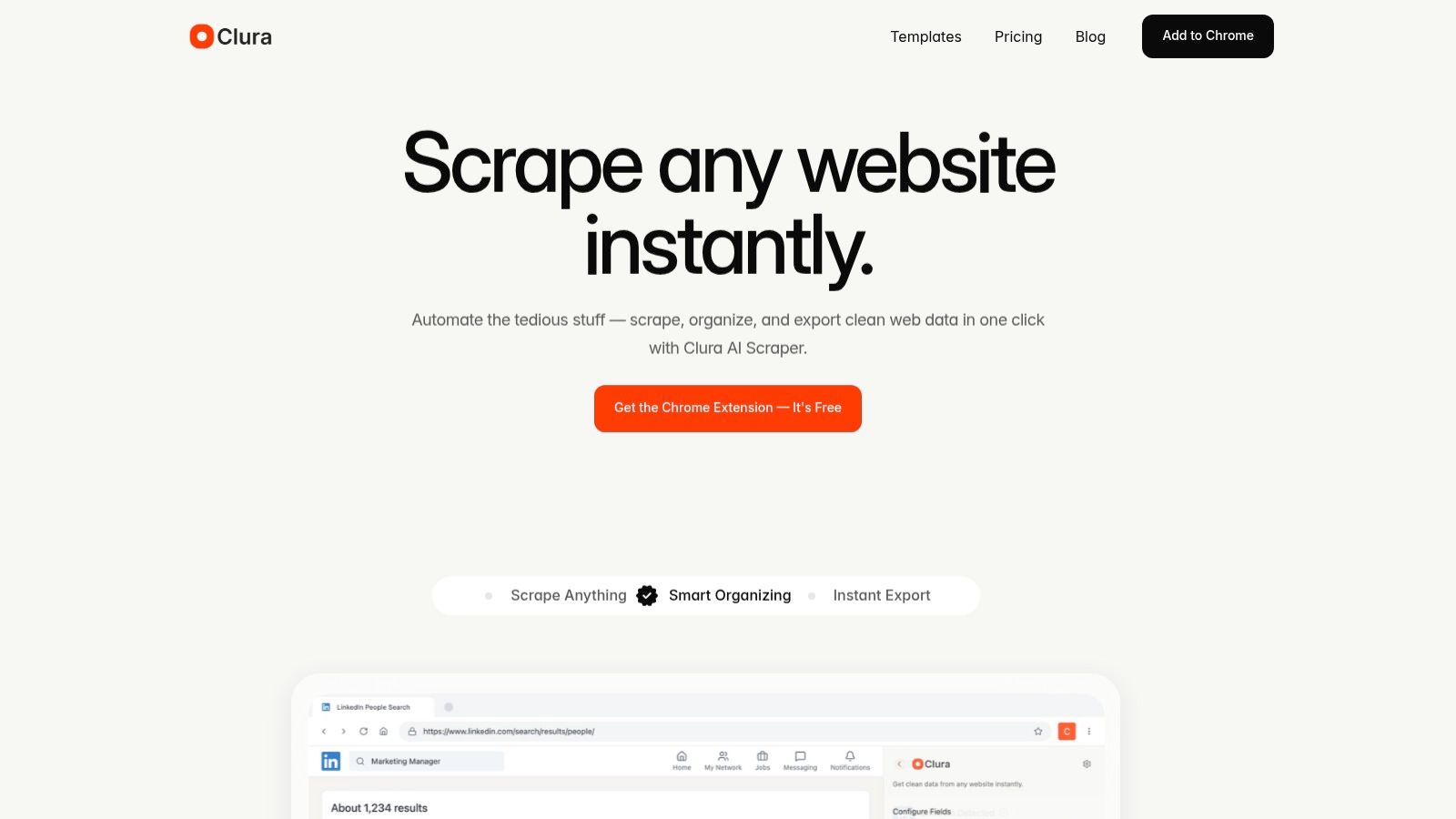
Its biggest strengths are simplicity and automation. Instead of complex setups, you can instantly scrape, organize, and export data to a CSV. You can even train Clura's AI agents to perform repetitive runs, which is a game-changer for daily price monitoring or weekly competitor analysis. The platform promises to give you back hours every week, a claim backed by over 1,000 users and a stellar 4.9/5 rating.
Key Features and Practical Use Cases
Clura is designed for action, with features that lead to faster workflows and better data.
No-Code, Browser-First Interface: As a Chrome extension, installation is instant. Just activate the scraper on any page, select the data you need, and export. It eliminates the steep learning curve of traditional scraping software.
AI Agent Automation: Set up "agents" to re-run scraping tasks on a schedule. An e-commerce brand can automatically track competitor prices on Amazon every morning. A recruiter can pull the latest job postings from a niche board weekly.
Broad Source Coverage with Templates: Clura offers pre-built templates for popular platforms like LinkedIn, X (formerly Twitter), Crunchbase, and various job boards. A sales team can quickly build a lead list from LinkedIn, or a marketing team can analyze sentiment on X without starting from scratch.
Clean, Structured Data Export: The output is always a clean, organized CSV file. This ensures the data is immediately ready for your CRM, outreach tool, or analytics dashboard, saving you hours of manual cleanup.
Pricing and Getting Started
Clura offers a straightforward pricing model so anyone can start immediately.
Free Tier: Includes 300 rows of data per month, perfect for small projects or for testing the platform's features.
Grow Tier: Starts at just $15 per month for 1,000 rows and includes unlimited agent runs and email support.
While currently limited to Chrome, its ease of use, powerful automation, and instant results make it a top choice for any team looking to harness web data. Understanding the nuances of web scraping legal news today is vital, and a tool like Clura helps teams gather public data efficiently.
Learn more at Clura.ai.
2. Law360 (LexisNexis)
For teams needing to go beyond headlines and into court filings and legal arguments, Law360 is a powerhouse. This premium news service from LexisNexis is the gold standard for real-time, professional legal reporting. If you want to know that a new web scraping lawsuit was filed, who filed it, and what the central claims are, Law360 is your destination.
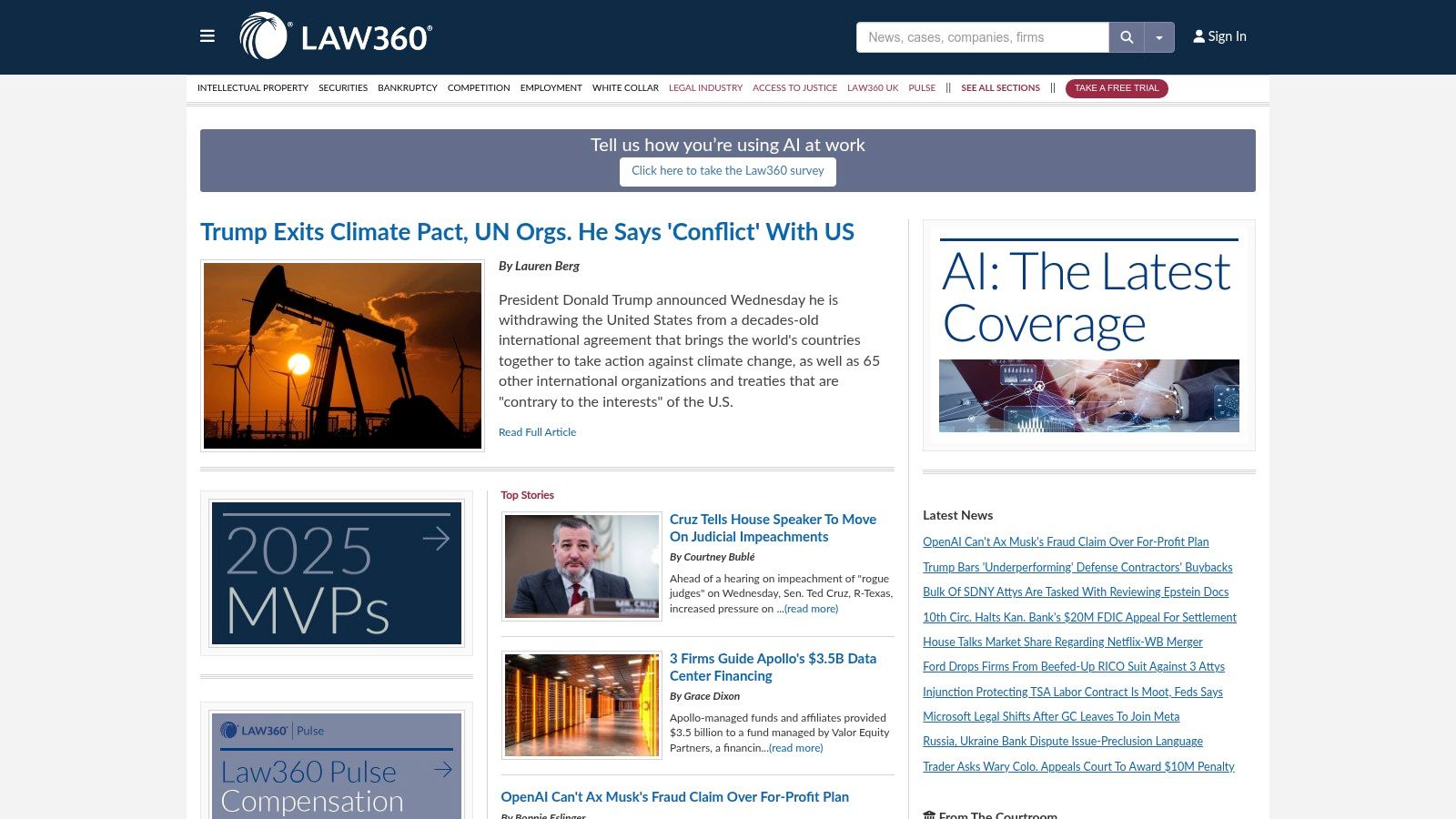
What makes it essential for tracking web scraping legal news today is its direct integration with court dockets. Articles often link to the actual complaints and motions, giving you primary source access that other news outlets can't provide. As a premier source mentioned, Law360 is one of the leading legal research software platforms professionals trust.
How to Maximize Law360 for Scraping Intelligence
Getting the most out of Law360 requires a smart approach, especially since it's a subscription service. Here’s how:
Set Up Keyword Alerts: Create email alerts for terms like "web scraping," "data scraping," "CFAA," and "computer fraud." This pushes breaking news directly to your inbox.
Focus on Key Verticals: Read the "Technology," "Intellectual Property," and "Privacy" sections. These are hotspots for cases involving data extraction.
Follow Key Cases: Use the platform to "follow" major lawsuits. This gives you a dedicated feed for every new filing or order in a specific case.
Pros and Cons at a Glance
Strengths | Limitations |
|---|---|
Timeliness: Often reports on filings within hours. | Paywalled: Requires a corporate subscription. |
Docket Access: Links directly to key court documents. | U.S. Focus: Coverage is heavily litigation-centric. |
Expert Analysis: Includes commentary from legal pros. | Niche Audience: Geared toward legal practitioners. |
Law360 is an investment, but for any organization where the legal risks of data scraping are a primary concern, its depth and speed are unmatched. It’s the difference between reading about a legal trend and seeing it unfold document by document.
Website: https://www.law360.com
3. Bloomberg Law (News on Bloomberg Law)
For professionals who need not just the news but also the surrounding legal context, Bloomberg Law is an unparalleled resource. It bridges the gap between breaking headlines and the legal principles behind them. If you want to understand how a new court ruling on web scraping fits into the broader landscape of privacy law, Bloomberg Law provides the expert analysis to connect those dots.
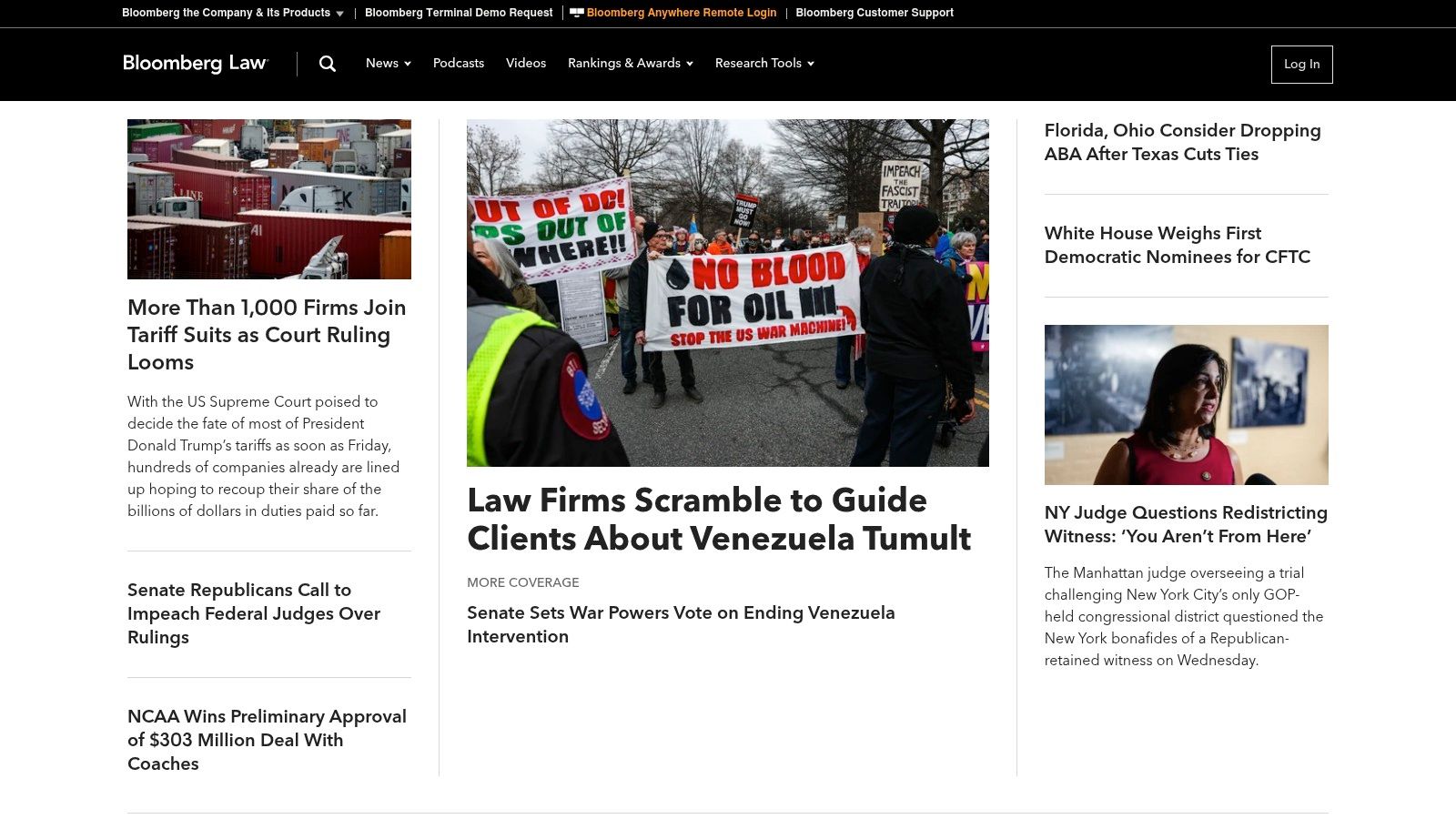
What truly sets Bloomberg Law apart for web scraping legal news today is its seamless integration of news, dockets, and practical guidance. An article about a new scraping lawsuit is a gateway to expert commentary and related case law, all in one platform. For those who need to automate data gathering, you can even explore a Bloomberg company news scraper for analysis.
How to Maximize Bloomberg Law for Scraping Intelligence
To harness the full power of Bloomberg Law, a focused strategy is key. Here’s how to turn its comprehensive database into actionable intelligence:
Activate News Alerts: Set up daily alerts for keywords like "data scraping," "Computer Fraud and Abuse Act," "hiQ," and "LinkedIn" to receive curated updates.
Use Practical Guidance: Dive into the "Practical Guidance" section for privacy and data security. These resources include checklists and analysis to help you build internal compliance memos.
Track Companies and Topics: Use the platform's tracking tools to follow key companies involved in scraping litigation for a personalized news feed.
Pros and Cons at a Glance
Strengths | Limitations |
|---|---|
High Editorial Standards: In-depth, expert-led analysis. | Enterprise Subscription: Pricing is not publicly available. |
Integrated Primary Law: Links news to statutes and cases. | Overwhelming for Basics: May be more than needed for just headlines. |
Build Memos Easily: Useful for linking directly to legal authorities. | Corporate Focus: Tailored for in-house counsel and law firms. |
Bloomberg Law is a significant investment aimed at legal professionals. But for any organization needing to build a defensible compliance strategy around data scraping, its blend of timely news and deep legal analysis is indispensable. It empowers you to not just follow the news, but to truly understand it.
Website: https://news.bloomberglaw.com
4. Westlaw Today (Thomson Reuters) — powered by Reuters Legal
For teams that want the authority of a global news organization combined with the depth of a legal tech giant, Westlaw Today is a fantastic resource. Powered by Thomson Reuters, it blends the speed of Reuters' legal reporting with the analytical tools of Westlaw. This combination provides a powerful, high-level overview of the legal landscape, making it ideal for business leaders tracking the bigger picture.
What makes Westlaw Today a go-to source for web scraping legal news today is its accessibility and reliability. The "Daily Docket" newsletter delivers concise summaries of top legal stories to your inbox, saving you time. This service is a perfect entry point for understanding breaking news without needing a full legal research subscription. You can even learn how a Reuters business news scraper can automate this data collection.
How to Maximize Westlaw Today for Scraping Intelligence
Using Westlaw Today effectively means leveraging its features to create a customized news feed. Here’s how:
Subscribe to the "Daily Docket": This is the easiest first step. The daily email is a quick, scannable way to catch major headlines related to data privacy and technology lawsuits.
Follow Key Topic Pages: Navigate to the "Technology," "Intellectual Property," and "Cybersecurity & Privacy" sections. Bookmark these pages for curated news on scraping-related legal issues.
Bridge to Westlaw Research: If you have a Westlaw subscription, use articles on Westlaw Today as a jumping-off point to deeper case law and commentary within the main platform.
Pros and Cons at a Glance
Strengths | Limitations |
|---|---|
Reuters Authority: Fast, neutral reporting you can trust. | Paywall Integration: Full details may require a subscription. |
Newsletter Convenience: Easy email-based monitoring. | Surface-Level: Some articles are high-level summaries. |
Broad Coverage: Reports on a wide range of legal topics. | Less Practitioner-Focused: Geared more toward general awareness. |
Westlaw Today strikes an excellent balance between accessibility and authority. It’s perfect for teams that need to stay informed on legal trends without getting bogged down in the details of every court filing.
Website: https://legal.thomsonreuters.com/en/products/westlaw-today
5. IAPP (International Association of Privacy Professionals)
While legal news often focuses on court battles, the IAPP provides a crucial, different angle: privacy and compliance. For teams needing to understand the regulatory landscape beyond litigation, the IAPP is essential. It connects web scraping practices to data protection laws like GDPR and CCPA, offering a global viewpoint that is often missing from U.S.-centric legal reporting.
The IAPP is where you go to understand the why behind scraping regulations. Instead of just reporting that a company was fined, it explains the underlying privacy principles that were violated. This makes it a goldmine for anyone aiming to build a sustainable, ethical data acquisition strategy. Following the IAPP is a key part of understanding the full scope of web scraping legality today.
How to Maximize the IAPP for Scraping Intelligence
To get the most value from the IAPP, look beyond simple news alerts and engage with its deeper resources. Here’s how:
Subscribe to Newsletters: The IAPP's newsletters are fantastic for getting curated summaries of global privacy developments, including analysis of data scraping enforcement actions.
Explore Topic Pages: Dive into their dedicated sections on "Data Privacy," "Cybersecurity," and "AI Governance." These areas feature in-depth explainers on scraping-related court decisions.
Monitor Regulator Guidance: The IAPP excels at reporting on guidance from Data Protection Authorities (DPAs) in the EU and elsewhere, which is critical for international operations. For those navigating this area, a practical AI GDPR compliance guide can be an invaluable resource.
Pros and Cons at a Glance
Strengths | Limitations |
|---|---|
Global Privacy Focus: Excellent coverage of EU/global views. | Membership Benefits: Full access to some content requires membership. |
Regulatory Context: Explains the "why" behind scraping rules. | Less Litigation-Focused: Not a source for real-time court filings. |
Practitioner-Oriented: Analysis is geared toward compliance. | Broad Scope: Not exclusively focused on scraping; requires filtering. |
The IAPP is less about breaking courtroom news and more about understanding the privacy risks in data scraping. For any organization looking to scrape data responsibly, the insights from the IAPP are indispensable.
Website: https://iapp.org
6. Electronic Frontier Foundation (EFF) — Deeplinks Blog
For those who need to understand the "why" behind web scraping legal battles, not just the "what," the Electronic Frontier Foundation's (EFF) Deeplinks Blog is an essential read. As a leading civil liberties organization, the EFF provides accessible legal analysis that frames data scraping as a matter of free speech and public interest. It offers a powerful counter-narrative to platform restrictions.
What makes the EFF's blog so valuable for tracking web scraping legal news today is its focus on the Computer Fraud and Abuse Act (CFAA), a cornerstone of anti-scraping litigation. The EFF frequently publishes rapid explainers after key rulings and files amicus briefs that argue for a more open and accessible internet. This gives you a clear view of the legal principles that could define the future of data collection.
How to Maximize EFF for Scraping Intelligence
The Deeplinks Blog is a treasure trove of information, and it's completely free. Here's how to use it effectively:
Search the Archives: Use their search function for terms like "scraping," "CFAA," and "Terms of Service" to find posts that trace the evolution of legal arguments.
Read Amicus Briefs: When the EFF participates in a case, they often publish their amicus briefs. Reading these provides a masterclass in the legal arguments that support public-interest scraping.
Follow Key Authors: Identify the staff attorneys who write frequently on data and access issues to get a consistent stream of expert commentary.
Pros and Cons at a Glance
Strengths | Limitations |
|---|---|
Free, Accessible Analysis: No paywall, written for a broad audience. | Advocacy Orientation: Not a neutral newswire. |
Primary Source Links: Posts link directly to court filings and briefs. | Less Docket Detail: Not for day-to-day case filing updates. |
Crucial Counterpoint: Offers a vital perspective against platform narratives. | Policy Focused: More on legal theory than business impact. |
While not a replacement for a docket-monitoring service, the EFF’s Deeplinks Blog provides indispensable context. It helps you understand the foundational legal debates that will shape scraping regulations for years to come.
Website: https://www.eff.org/deeplinks
7. Technology & Marketing Law Blog (Eric Goldman)
For business leaders who need to understand the legal nuances of scraping without the dense legalese, Eric Goldman’s Technology & Marketing Law Blog is an indispensable resource. This long-running blog provides candid, expert analysis of key court cases involving the CFAA, trespass to chattels, and terms of service enforcement. It masterfully translates complex legal concepts into plain-English takeaways.
What makes this blog a must-read for anyone tracking web scraping legal news today is its incredible depth and sharp analysis. Professor Goldman doesn't just report on rulings; he dissects the arguments and explains what the decisions actually mean for business strategy. It’s the perfect source for understanding the "why" behind major precedents like the landmark hiQ v. LinkedIn case.
How to Maximize the Blog for Scraping Intelligence
Treat this blog like an educational archive, not just a news feed. Here’s a practical approach:
Search the Archives: Use the site’s search function for terms like "scraping," "CFAA," or "LinkedIn" to trace the evolution of legal thinking on a topic.
Focus on 'What This Means' Sections: Pay close attention to the concluding analysis in each post, where the author connects legal doctrine to business implications.
Follow the Citations: Posts are rich with links to primary court documents and related commentary. Use these to dive deeper into cases relevant to your operations.
Pros and Cons at a Glance
Strengths | Limitations |
|---|---|
Free Access: No paywalls or subscriptions required. | Blog Cadence: Not a real-time newsroom. |
Candid Analysis: Connects law to real-world product impact. | Opinionated Tone: Offers a distinct viewpoint. |
Primary Source Links: Cites key documents and commentary. | Niche Focus: Centers on U.S. tech and internet law. |
While not a breaking news wire, this blog offers a level of contextual understanding that is incredibly valuable. For teams that need to make informed, risk-aware decisions about data scraping, it provides the essential legal education they need, free of charge.
Website: https://blog.ericgoldman.org
Turn Legal Insights Into Confident Action
Staying current with web scraping legal news today isn’t about navigating a minefield. It’s about building a launchpad for confident, data-driven action. You now have a powerful list of resources, from specialized legal news outlets to vital advocacy voices, that can turn legal ambiguity into a competitive advantage.
The days of "scrape and pray" are over. By integrating these tools into your workflow, you replace uncertainty with a proactive strategy. You can build sales pipelines, conduct market research, and source talent with the assurance that your methods are grounded in current best practices. This isn't just about avoiding risk; it's about innovating responsibly.
From Information to Implementation: Your Next Steps
Knowledge is only powerful when you act on it. Here’s how you can immediately turn these legal updates into a cornerstone of your scraping strategy:
Schedule a "Legal Pulse" Check-in: Dedicate 30 minutes every other week to scan your new bookmarks and alerts. The goal is to spot trends that might affect your use case, whether it’s scraping public pricing data or social media profiles.
Create a Simple Compliance Checklist: Based on what you've learned, develop a short, internal checklist for every new scraping project. Does the target site have a restrictive
robots.txtfile? Are you collecting personally identifiable information (PII)? This simple step reinforces ethical data handling.Match the Tool to the Task: Re-evaluate your scraping tools. A browser extension might be perfect for a simple task, while a more sensitive project may require a different approach. Aligning your tool's capabilities with the legal sensitivity of your project is a critical step.
Choosing the Right Path Forward
The core takeaway from all the web scraping legal news today is that context matters immensely. A ruling about scraping data behind a paywall has different implications than one concerning publicly accessible information. Your job is to understand these nuances and apply them.
Proactive legal awareness doesn't slow you down; it allows you to move faster and more decisively because you've eliminated the guesswork. You can pursue ambitious data projects knowing you’re on solid ground.
Embrace this new era of web scraping with enthusiasm. You are now equipped to lead your team with clarity, turning complex legal updates into simple, actionable rules that foster innovation. The web is an incredible source of public data, and by approaching it ethically and intelligently, you unlock its full potential.
Ready to pair your legal know-how with a tool built for modern, responsible data collection? Clura simplifies web scraping with an AI-powered, no-code platform that lets you build robust and compliant workflows in minutes. Explore prebuilt templates.
